Bat Removal in Charleston, SC
Humane bat removal from homes and attics across Charleston and the Lowcountry.
Call (843) 874-6446 for a free estimate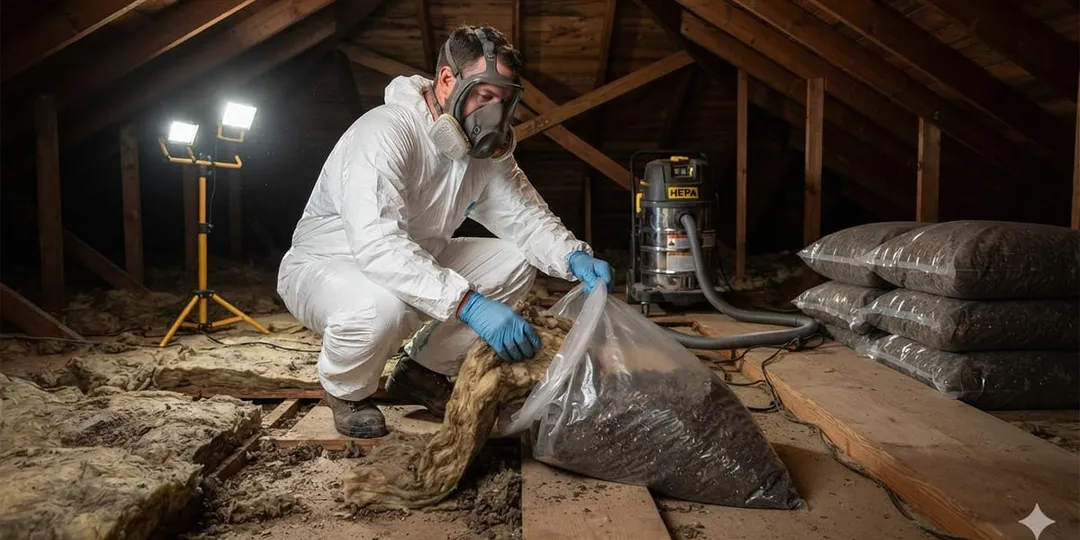
What this service covers
Bat removal in Charleston, SC means getting bats out of your home safely, legally, and permanently — and it's a job for a licensed professional. South Carolina law protects bats, so there's no trapping, no poisons, and no killing. What we do is humane exclusion: one-way devices that let bats leave on their own at night, followed by sealing every entry point so they can't get back in. If you're hearing scratching at dusk, finding guano in the attic, or seeing bats stream out of your roofline at sunset, this is the service you need. Charleston Bat Removers handles the full process for homeowners across the Lowcountry — inspection, exclusion, cleanup, and proofing — with free estimates and written warranties.
How Bat Removal Works in Charleston
Bat removal in Charleston follows a specific process because South Carolina law dictates how it has to be done. You can't trap bats. You can't poison them. You can't seal them inside. The only legal method is exclusion — installing one-way devices over the bats' exit points so they can leave at night to feed but can't get back in. Once every bat is out, we remove the devices and seal those entry points permanently.
The process starts with a full inspection of your attic and exterior. We find every entry point — and bats don't need much. A gap of 3/8 inch is enough for a Brazilian free-tailed bat to squeeze through. We map every gap, crack, and opening on your roofline, then install one-way exclusion devices over the primary exits. Bats typically clear out within three to seven nights. After that, we remove the devices, seal the remaining openings with copper mesh and industrial-grade sealant, and do a final inspection to confirm the colony is gone.
Timing matters. South Carolina prohibits exclusion during maternity season — May 15 through August 15 — because flightless pups could be trapped inside and starve. If you call us during that window, we'll assess the situation and schedule the work for mid-August when it's legal. Emergency situations get handled case by case, but we won't break the law or orphan pups.
Signs You Need Bat Removal
Bats aren't always obvious. You might go months without realizing a colony has moved into your attic. The signs are there, though — you just need to know what to look (and listen) for.
Scratching and squeaking sounds at dusk and dawn are the most common tipoff. Bats are nocturnal, so they're active right after sunset when they leave to feed, and again right before dawn when they return. If you hear noise in your ceiling or walls at those times, bats are a likely culprit. Guano piles near entry points are another dead giveaway — look for small, dark droppings accumulated on the ground below where bats enter. You might also see dark brown staining on your siding around gaps and openings. That's body oil from bats squeezing through repeatedly.
An ammonia smell in the attic is a sign the colony has been there a while. Guano builds up, urine soaks into insulation, and the odor gets strong enough to waft into living spaces. If you're seeing bats exit your roofline at sunset — sometimes dozens at a time — you've got a confirmed colony. The best move at that point is a professional inspection before the problem gets worse.
Why Bats Get Into Charleston Homes
Bats end up in Charleston homes for the same reasons they end up anywhere: they're looking for a warm, dry place to roost, and your attic happens to have an opening. But Charleston has specific factors that make bat problems more common here than in most places.
The Lowcountry's marshes, creeks, and waterways produce enormous insect populations. Bats follow the food, and when the food is everywhere, bats are everywhere. Add in the live oaks and Spanish moss that dot the Charleston landscape — ideal natural roosting habitat — and you've got one of the most bat-friendly environments on the East Coast. Development keeps pushing into those habitats, though. New construction in Mount Pleasant, Summerville, and Johns Island displaces bats from natural roosts, and those displaced bats don't go far. They find the nearest structure with a gap and move in.
Charleston's housing stock makes it easy for them. Historic homes downtown and on James Island have decades of settling, wood shrinkage, and storm exposure that create gaps bats exploit. Even newer homes in Daniel Island and Mount Pleasant can have construction gaps at gable vents, soffits, and ridge vents. The Charleston single house design with its vented attics and piazza gaps is practically an invitation if those vents aren't screened.
What Affects Bat Removal Cost
Every bat removal job is different, which is why we give free estimates with itemized pricing rather than vague ranges. But the factors that drive cost are consistent.
Colony size is the biggest variable. A small colony of ten bats with one entry point is a straightforward job. A hundred-bat colony with multiple entry points across a complex roofline takes more time, more materials, and more labor. The number of entry points matters too — some homes have one obvious gap, others have a dozen. Difficulty of access plays a role. A single-story ranch with a walk-up attic is easy. A three-story historic home with a steep roof and no attic access takes specialized equipment and more time.
Guano cleanup is often a separate cost from exclusion. If you've had bats for years, the guano accumulation in your attic could be significant, and remediation adds to the total. Proofing scope — how many potential entry points we seal beyond the active ones — affects the price but also determines whether the bats come back. Addressing the problem early is almost always cheaper. A small colony that's been there two months costs less to remove than one that's been growing for two years.
Bat Removal vs. Bat Exclusion
People use "bat removal" and "bat exclusion" interchangeably, but they're not quite the same thing. Bat exclusion is a specific method — the one-way device approach that lets bats leave on their own. Bat removal is the broader term that describes the overall goal: getting bats out of your house. In South Carolina, exclusion isn't just the best method — it's the only legal one. Trapping, poisoning, or killing bats violates state law and can bring fines.
Here's the distinction that matters to you as a homeowner: "removal" without exclusion is a revolving door. Someone seals up the entry points while bats are still inside, and now you've got bats trapped in your attic. They'll find their way into your living space trying to get out, and some will die in your walls. That's how dead bat problems start. Exclusion is the method. Removal is the result. You need both, done in the right order, by someone who knows South Carolina's regulations.
Full remediation — guano cleanup and insulation replacement — is a separate phase that follows exclusion. Not every job needs it. If the colony was small and caught early, exclusion and proofing might be enough. If guano has accumulated in your attic, remediation protects your family from histoplasmosis and restores your attic to a clean condition. We'll tell you honestly which phase you need and which you don't.
Service areas
We provide bat removal across Charleston and the surrounding Lowcountry communities:
Frequently Asked Questions
How much does bat removal cost in Charleston, SC?
Costs vary based on colony size, number of entry points, attic damage, and proofing scope. Most jobs range from $300 to $5,000+. We offer free estimates with transparent, itemized pricing — no vague ranges. The only way to get an accurate number is an on-site inspection.
Is bat removal legal in South Carolina?
Yes, but bats are protected under South Carolina law. Exclusion — one-way devices that let bats leave on their own — is the only legal method. No poisons, no trapping, no killing. Maternity season runs May 15 through August 15, and exclusion during that window is restricted to prevent orphaning flightless pups.
How do I know if I have bats in my attic?
Listen for scratching or squeaking at dusk and dawn. Look for guano piles near the base of your walls or on the ground below your roofline. Check for dark brown stains on siding near gaps. An ammonia smell in the attic is a sign of an established colony. If you see bats exiting your roof at sunset, you've got bats.
Can I remove bats myself?
No. Bats are protected by SC law, and DIY methods don't work. Mothballs and ultrasonic devices are ineffective and won't solve the problem. Sealing entry points while bats are inside is illegal and traps them — they'll end up in your living space or die in your walls. Professional exclusion is the only method that's both legal and effective.