Home › Services › Bat Exclusion
Bat Exclusion in Charleston, SC
The professional, legal method for getting bats out of your home — permanently.
Call (843) 874-6446 for a free estimate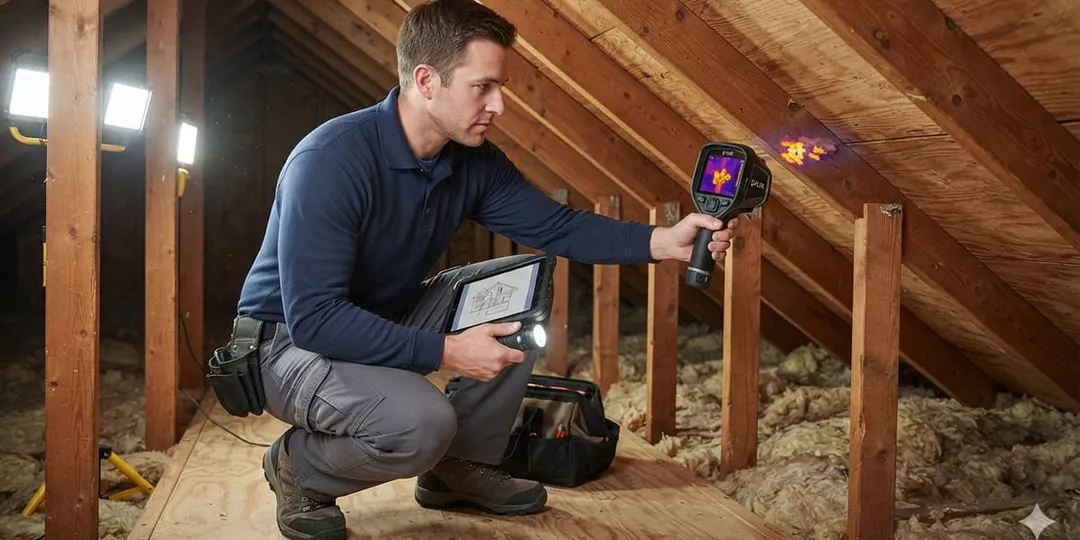
What this service covers
Bat exclusion in Charleston, SC is the process of installing one-way devices over bats' exit points so they can leave your home but can't re-enter. It's the only legal and humane method of bat removal under South Carolina law — no trapping, no poisons, no killing. Charleston Bat Removers has been performing exclusion across the Lowcountry for over ten years, working within SC DNR regulations and maternity season restrictions. If bats are in your attic, this is the service that gets them out — safely, legally, and for good. Exclusion is the core of every successful bat removal job, and it works because bats leave on their own terms, not ours.
How Bat Exclusion Works
Bat exclusion is a patience game, and it works because bats do the work themselves. We don't touch them, trap them, or handle them. Here's the process: First, we inspect your attic and the full exterior of your home to identify every entry and exit point. Bats use specific openings — usually gable vents, soffit gaps, or roofline joints — and we map all of them. Then we install one-way exclusion devices over the primary exits. These devices are designed so bats can push out to leave at night but can't push back in to return.
Bats leave at dusk to feed on insects. When they try to come back before dawn, the one-way device blocks them. They'll circle for a while, then move on to another roost. The exclusion phase typically takes three to seven nights. We don't rush it — every bat needs to exit before we seal the final openings. Once we're confident the colony has left, we remove the devices and seal those entry points with copper mesh and industrial-grade sealant.
The sealing step is what makes exclusion permanent. If we just removed the one-way devices and left the openings, the bats would be back the next night. Every entry point — not just the active ones, but every potential gap of 3/8 inch or larger — gets sealed. That's what turns exclusion from a temporary fix into a permanent solution.
Signs You Need Bat Exclusion
The signs that point to exclusion are the same signs that point to any bat problem, but they're worth repeating because catching them early makes the whole process easier. Bats entering or exiting your home at dusk is the clearest sign. If you sit outside at sunset and watch your roofline, you might see them stream out one by one — sometimes just a few, sometimes dozens.
Guano accumulation is another indicator. You'll find small, dark droppings on the ground, on porches, or accumulated in the attic itself. Noises in the attic or walls at dusk and dawn — scratching, squeaking, or the sound of movement — are bats going about their routine. Dark staining on your siding near gaps is body oil from bats squeezing through the same opening night after night.
If you're seeing any of these signs, don't wait. Exclusion can't happen during maternity season (May 15–August 15), so if you notice bats in late spring, the legal window might not open until mid-August. Calling early means we can inspect, schedule the work, and have you bat-free before the problem grows.
Why Bats Return to Charleston Attics
Bats are creatures of habit. They return to the same roost year after year — a behavior called site fidelity. If your attic was a good roost last year, it's a good roost this year. Pheromones play a role too. Bat guano and urine leave scent trails that attract the same colony back, and those trails can linger for years if the area isn't properly cleaned.
This is why simply sealing holes without doing exclusion first doesn't work. If bats are inside when you seal, they're trapped. If they're outside, the pheromone trail is still there, and they'll search your home for any other opening — and they only need 3/8 inch to get back in. A home that's been bat-proofed at the active entry points but not at the secondary gaps is a home that will have bats again.
The Lowcountry makes this worse. Charleston's warm climate means bats are active for most of the year, and the marsh insect populations keep them well-fed. Historic homes with their aging materials and settling foundations develop new gaps every year. Without comprehensive exclusion and proofing — sealing every potential entry point, not just the ones bats are currently using — you're fighting a losing battle.
What Affects Bat Exclusion Cost
Exclusion cost comes down to how much work is involved, and that varies house to house. The number of entry points is the primary driver. A home with two active entry points is a simpler job than one with eight. Building height and roof complexity matter — a two-story home with a steep roof and multiple dormers takes more time and equipment than a single-story ranch. Historic homes in downtown Charleston and on James Island often have more complex rooflines, which adds to the labor.
The type of exclusion devices needed can vary too. Different entry points require different device configurations, and some are more involved to install than others. Whether remediation is also needed — guano cleanup, insulation replacement — is a separate cost that depends on how long the colony has been in place.
Exclusion is an investment, but it's a permanent one. Done right, with full proofing, the bats don't come back. Most of our exclusion work comes with a warranty — if bats get back in through a sealed point, we come back and fix it. That warranty is why it's worth doing the job completely the first time rather than cutting corners.
Bat Exclusion vs. Bat Proofing
Exclusion and proofing are two halves of the same job, and you need both. Exclusion gets bats out using one-way devices. Proofing seals every entry point — active and potential — with durable materials so they can't return. Exclusion without proofing means the bats leave and then come right back through the same openings. Proofing without exclusion means you've sealed bats inside your home, which is illegal and creates a worse problem.
The right sequence is exclusion first, then proofing. We let the bats leave through one-way devices, confirm they're all out, then seal every gap 3/8 inch or larger with copper mesh, galvanized flashing, and industrial-grade sealant. We install vent screens and chimney caps where needed. The proofing materials we use are chosen for Charleston's climate — copper mesh won't corrode in the humidity, and our sealants are rated for coastal conditions.
We recommend doing both in the same project rather than excluding first and proofing later. Here's why: the gap between exclusion and proofing is when bats are most likely to find another way back in. The pheromone trail is still active, the colony is still in the area, and any unsealed gap is an open door. Doing both together closes that window completely.
Service areas
We provide bat exclusion across Charleston and the surrounding Lowcountry communities:
Frequently Asked Questions
What is bat exclusion and how does it work?
Bat exclusion is the legal, humane method of removing bats from a building. One-way devices are installed over exit points so bats can leave but not return. Once all bats have exited (typically 3–7 days), the devices are removed and all entry points are permanently sealed. We never touch, trap, or harm the bats.
When can you exclude bats in South Carolina?
Exclusion should be performed outside maternity season (May 15–August 15) when flightless pups may be in the roost. Spring (March through mid-May) and late summer through fall (mid-August through October) are the ideal windows. Emergency situations during maternity season are handled case by case — call us to discuss.
How long does bat exclusion take?
The exclusion phase typically takes 3–7 days as bats must leave on their own through one-way devices. The full project — inspection, exclusion, proofing, and cleanup — usually takes 1–2 weeks of elapsed time with 2–4 days of on-site work spread across that period.
Does bat exclusion hurt the bats?
No. Exclusion is the most humane method available. Bats are never touched, trapped, or harmed. They leave to feed at night, find they can't re-enter, and relocate to a natural roost. That's exactly why South Carolina law mandates exclusion as the only legal method.